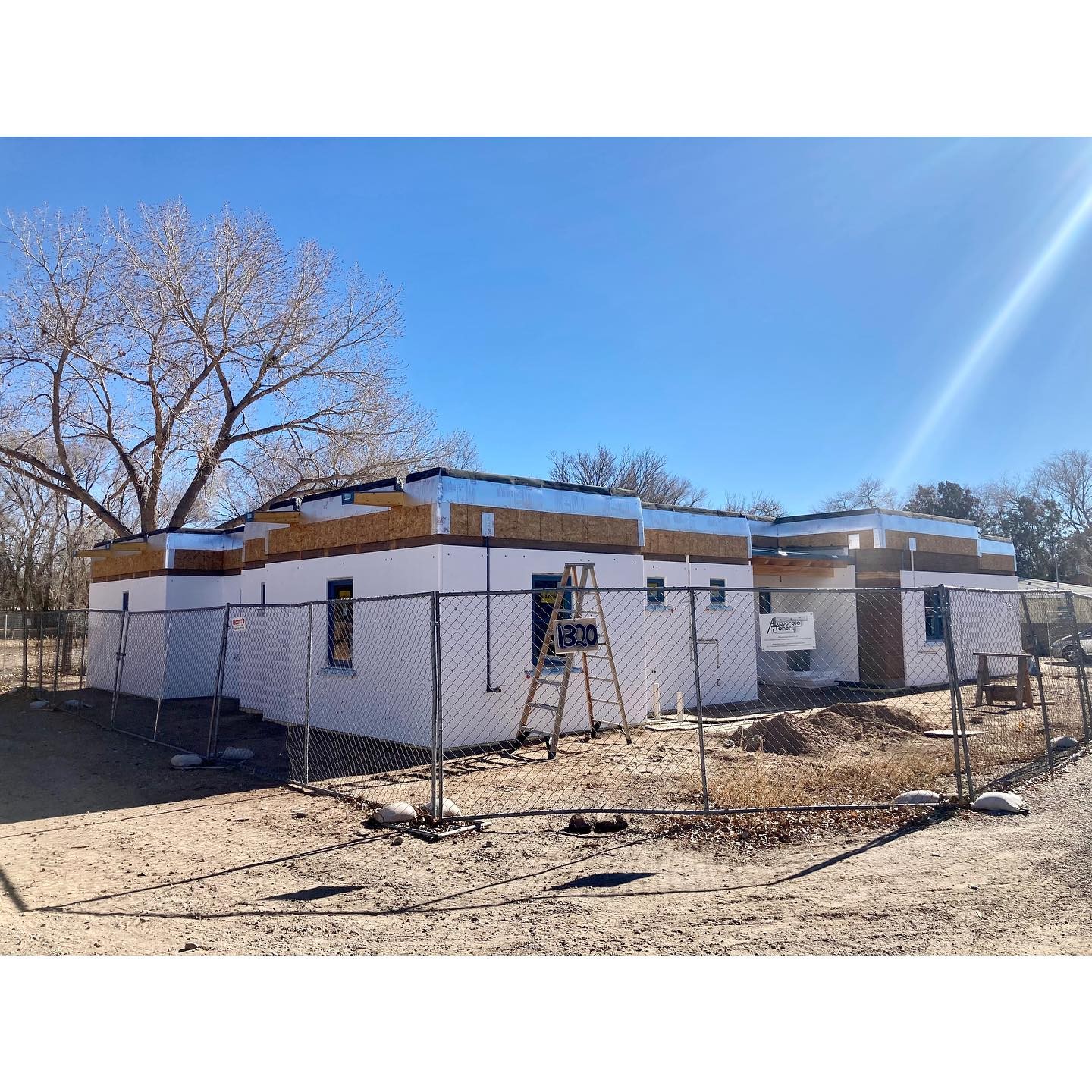

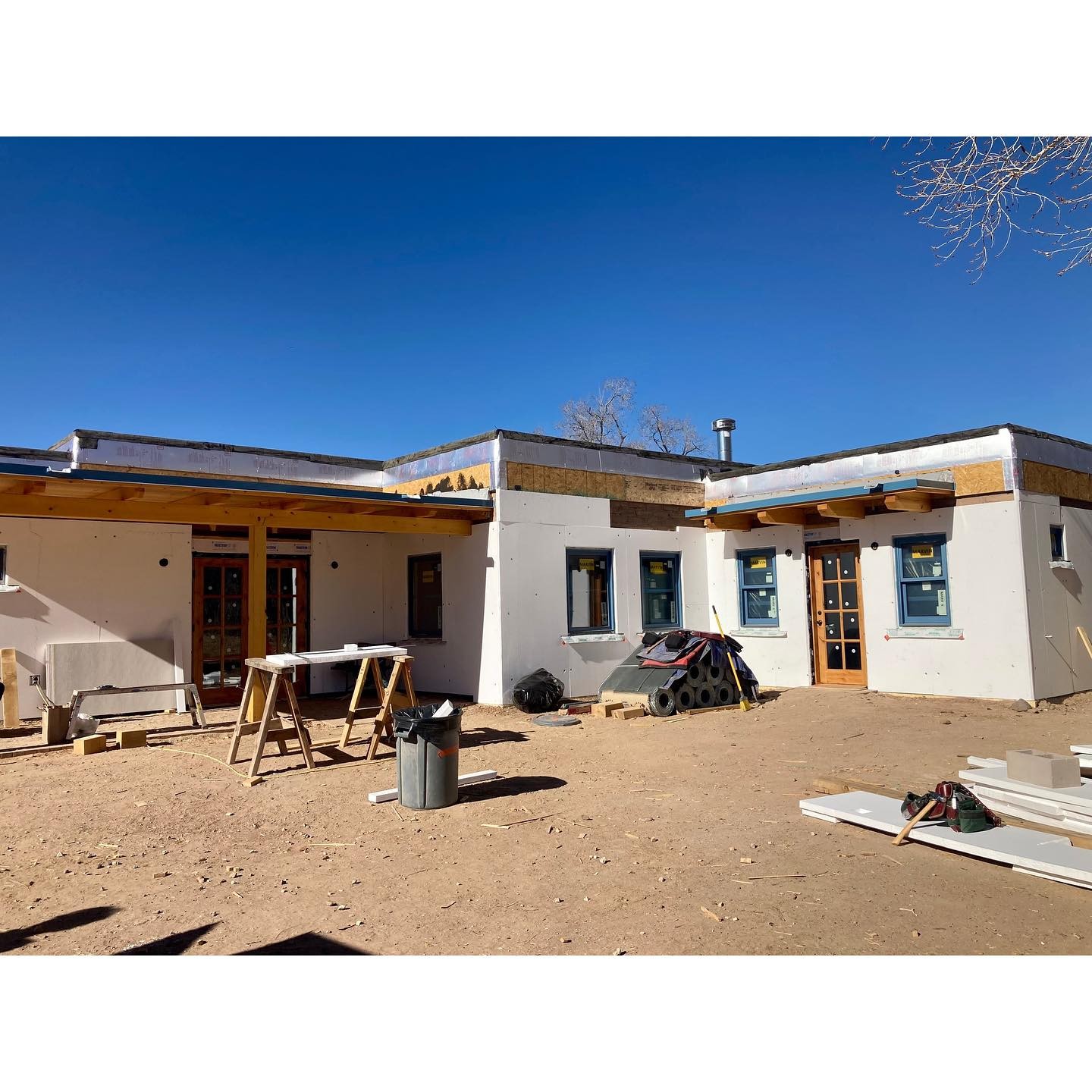
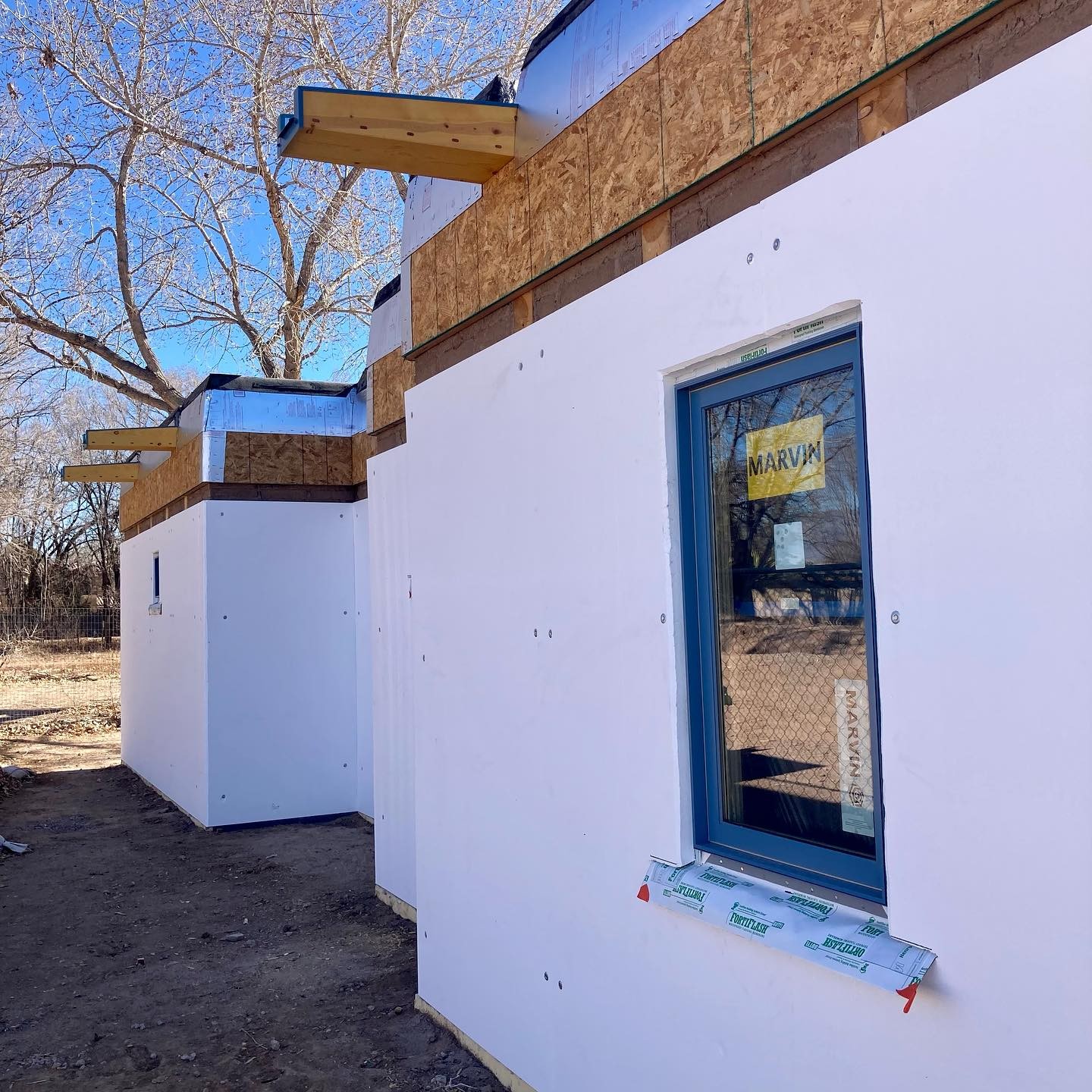
Why are we covering this adobe house in foam? It’s kind of a complicated question. We have to follow the insulation requirements in the energy conservation code for new residential construction, yet there is no accepted R-value for adobe. If measured in the same way that most insulation products are, adobe is R-1 or less. But clearly it is better than that, because adobe has a high capacity to store or absorb heat, and it does it really slowly. It really doesn’t “insulate” in the same way that foam or fiberglass does. How much sunlight an adobe wall receives, the color of the paint/stucco, latitude, etc. all affect its effective R-value, similar to how other insulation products actually have different R-values depending on how hot or cold it is, but the effect is much more dramatic. Putting a vapor permeable foam insulation on all the exterior walls is the standard method in the New Mexico Earthen Building Code to meet the insulation requirements. It’s pretty cost effective, and doesn’t require any engineering to prove that it works. The downside is, there’s something really incongruous about taking a beautiful mud wall and just nailing a petroleum product to it. It also makes one less inclined to finish the exterior with natural exterior plasters like adobe mud or lime (though it can be done). South facing adobe walls might not even need the foam insulation. But north facing walls certainly benefit from it. Anybody who has lived in an uninsulated adobe house in the winter knows that the rooms on the north side get COLD in the winter. So, while this standard method works well and meets the code, we’d still like to explore possible alternatives on future builds. #adobehouse #insulation #exteriorinsulation #epsfoam #rvalue #newmexicoearthenbuildingcode #adobe #adobebuilding #adobeconstruction #buildingperformance
Jan 14, 2022