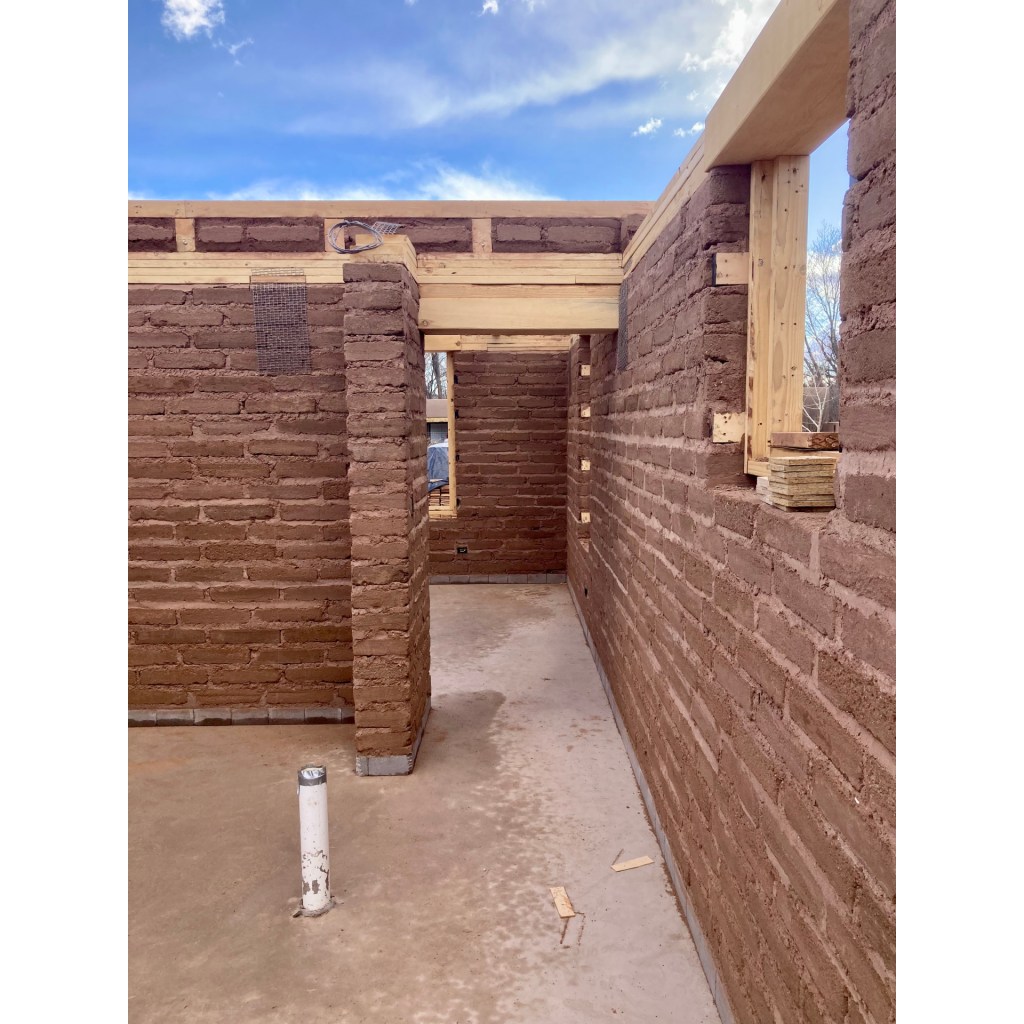
Last weekend we had the pleasure of hosting a tour for @theearthbuildersguild. Two non-standard adobe construction details stood out to folks at the tour: our gringo blocks, and the gaps we left at the top or door bucks, and bottom of window bucks. We’d like to share how and why we decided to build them this way.
For those unfamiliar, a gringo block is a wooden frame, the same size as an adobe brick, laid into an adobe wall. Traditionally, they’re made of 2×4’s filled with chunks of broken adobes and mud, or they can just be a solid chunk of 4×10. They work, but have some problems. For one, they tend to loosen over time– as they’re initially put in the wall, the wood swells in the presence of fresh adobe mud, and then when it all dries, the wood shrinks and has a looser fit in the wall. In addition to that, all those wood surfaces now need to be papered and lathed later before plaster. And perhaps the biggest issue is that we can’t really use gringo blocks in the same way they did back in the day –using them to directly nail window and door frames to– principally because of modern expectations around the airtightness of our buildings. These new concerns pretty much demand that we have some sort of frame to attach windows and doors to, can air seal, and flash for weather tightness. And yet, we have to recognize the genius of the gringo block: they allow the adobe masonry to settle after it is built, and do not create stresses in the fabric of the wall in the same way that door and window bucks do.
If you’ve followed our previous projects, you’ve seen us anchoring exposed window bucks into the wall with long strips of lath. This works very well structurally, but kind of interfered with our adobe workflow. Bucks like that are permanent pieces of finished woodwork that go into the wall in a pretty early stage of construction– they need to be put in place very accurately, they need to be continually checked and adjusted as we lay the wall, and they need to stay pretty clean and not get banged up. So the bucks with lath were solid but finicky and time consuming… and the old-school gringo blocks can’t really give us what we want either…
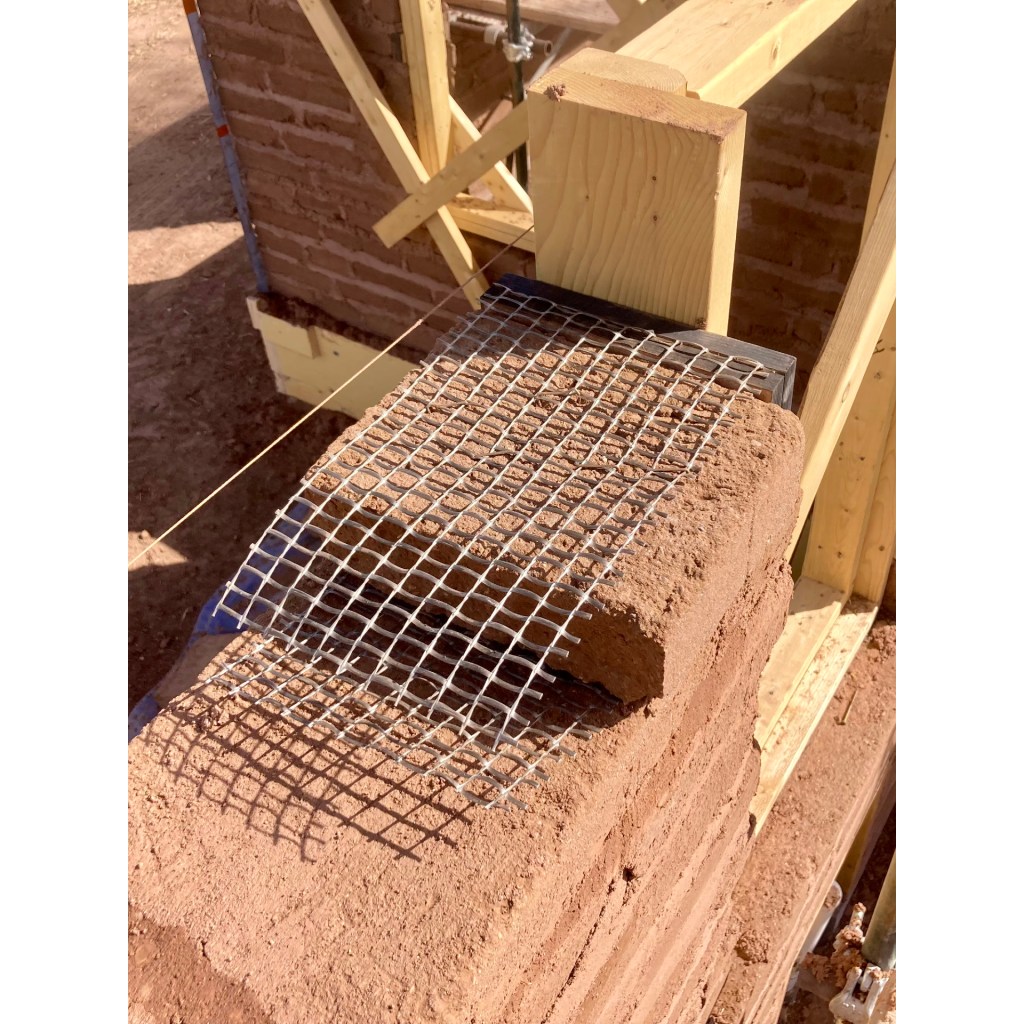
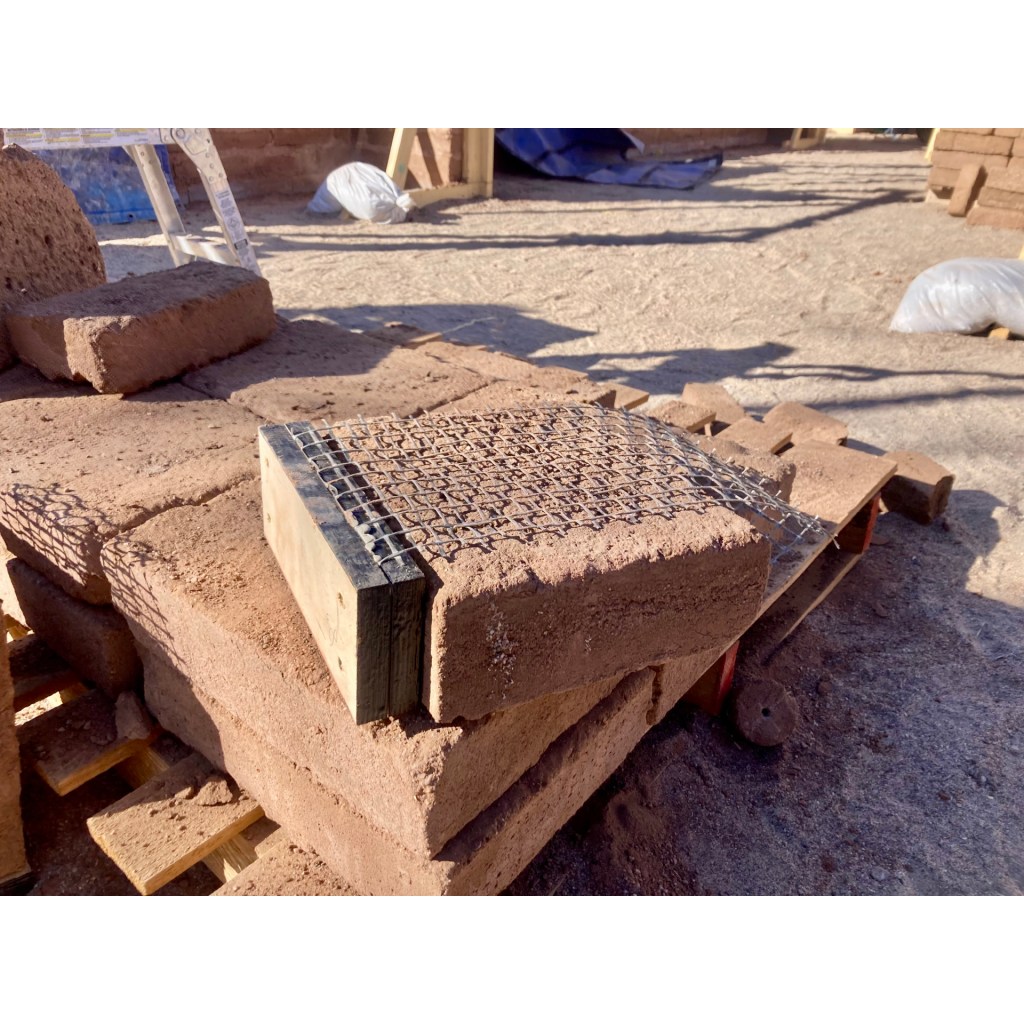
… enter the Space-Age Gringo Block! (at least, that’s what we’ve been calling them on the job site. We’re open to name suggestions. I’m sure they’ll be better than ours). We fabricated over a hundred of these guys for our window openings. These are made with 2 layers of plywood which sandwich an 8″ strip of fiberglass lath. The lath wraps gets wrapped around and stapled to an adobe, and then the whole thing is just laid up in the wall like a normal brick. This allowed us to have the window buck in an approximate don’t-worry-about-it-for-now position while we laid the wall, screwing the buck into its final position after the bond beam went on.
You might also notice that we used that same fiberglass lath to anchor the bond beam to the wall. Some kind of anchoring system, while not explicitly called for in the NM Earthen Building Code, is something the City of Abq building plan reviewers seem to really care about. We also had a structural engineer crunch the numbers, and indeed, in this case the window and door buck attachments alone would not be sufficient anchoring for keeping the roof on in a high wind event. So, every so often we laid a strip of the lath in the wall, four courses down from the bond beam. It was then folded up and anchored to the first layer of our built-up wood bond beam, tensioned, and stapled to the wall.
#gringoblock #spaceagegringoblock #adobeconstruction #adobebuilding #adobehouse #adobebuilder #adobero #earthenconstruction #bondbeam #earthenmasonry #adobes #tmi
Mar 14, 2025
 abqjoinery.com