

Foundation post 2/2:
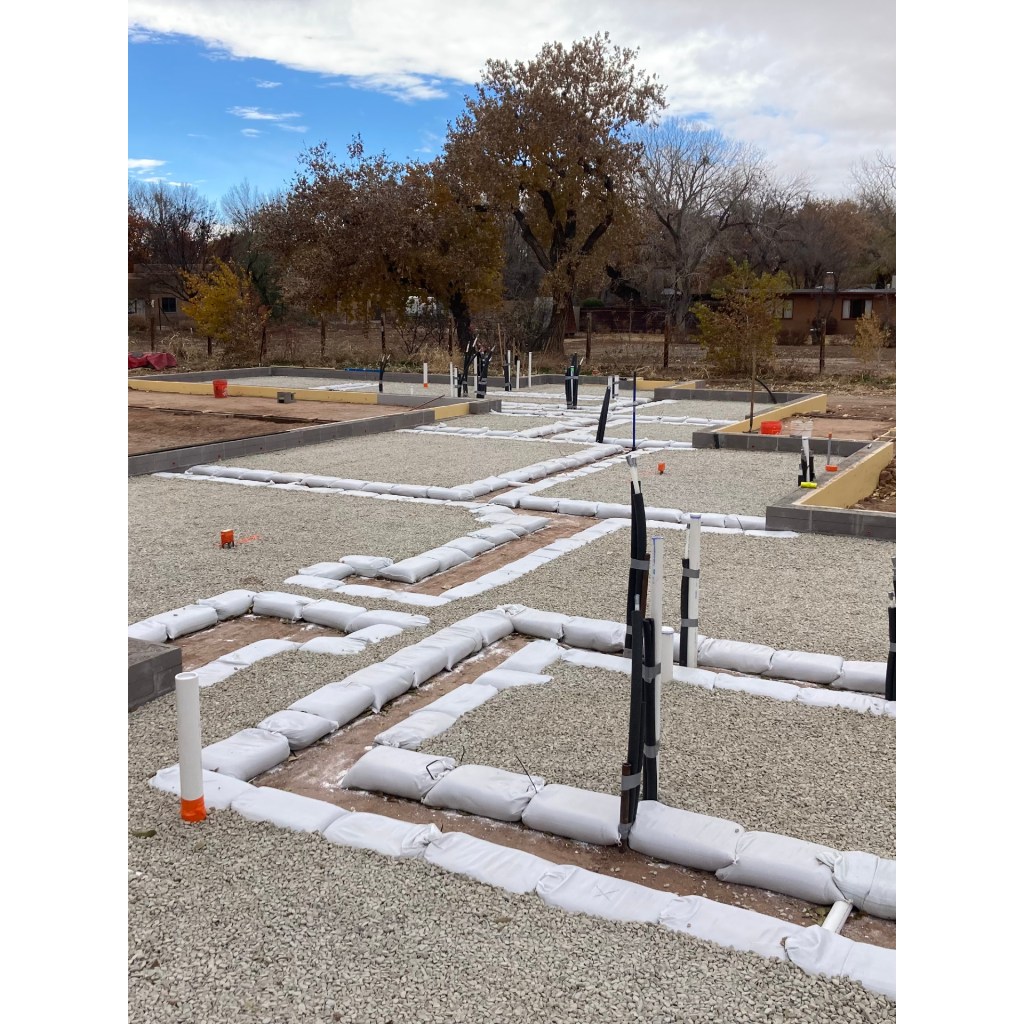
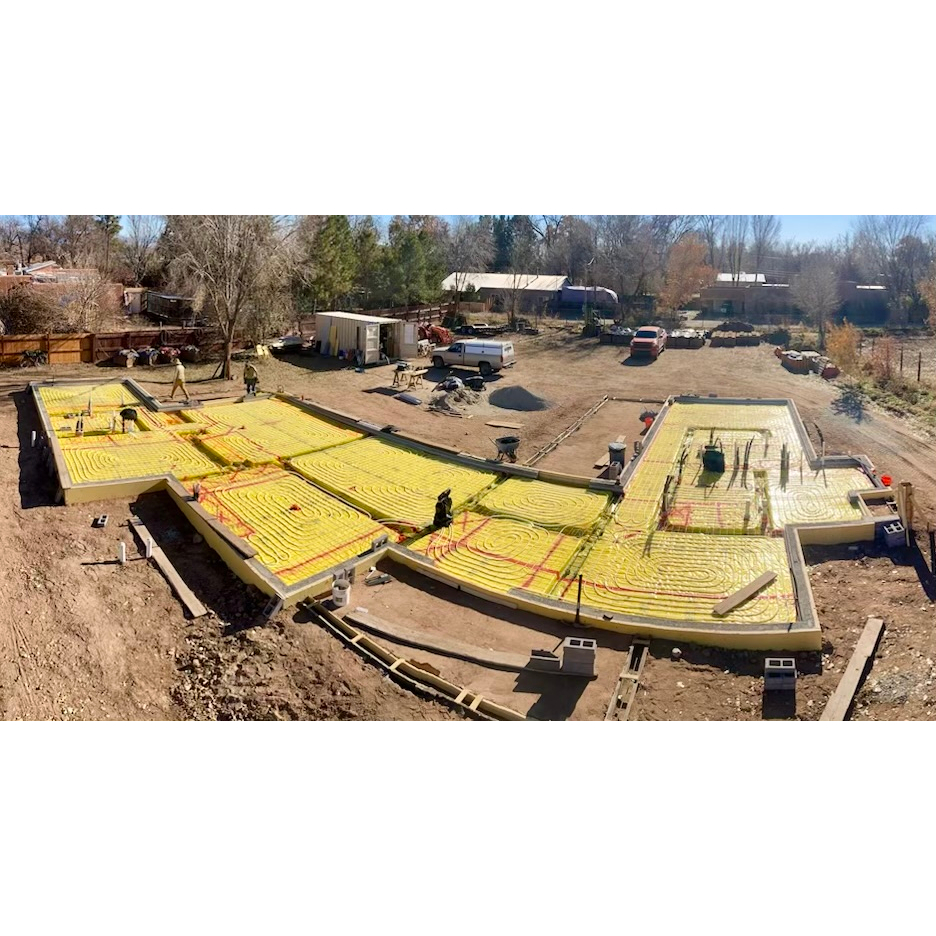
We also tried out what was, for us, a novel idea for how to form our thickened areas of the slab which support bearing and adobe walls above. Instead of digging down to form grade beams, we formed them up with sandbags, and filled the rest of the area with clean ¾” gravel. This is something that you are implicitly prohibited from doing by the City’s hydrology department, (that is, without building higher than required, which wastes our time and our clients’ money). But we were able to do it. We built the pad 4” lower than it is “supposed” to be, and then built up to the correct height with our weird sand bag and gravel method. The 4” gravel layer solved several problems for us: we are able to use this as part of a radon mitigation system, and from a purely practical perspective, leveling and tamping gravel to a specific height is much easier to do than with fill dirt. This whole thing felt like a bit of an experiment, but worked beautifully. The radon system is something that, in time, will probably be a mandatory requirement in many parts of the country; for now, though, it is just another orphaned complication of requiring houses to be more airtight than ever without enforcing complementary parts of the code. But that’s a story for another time…
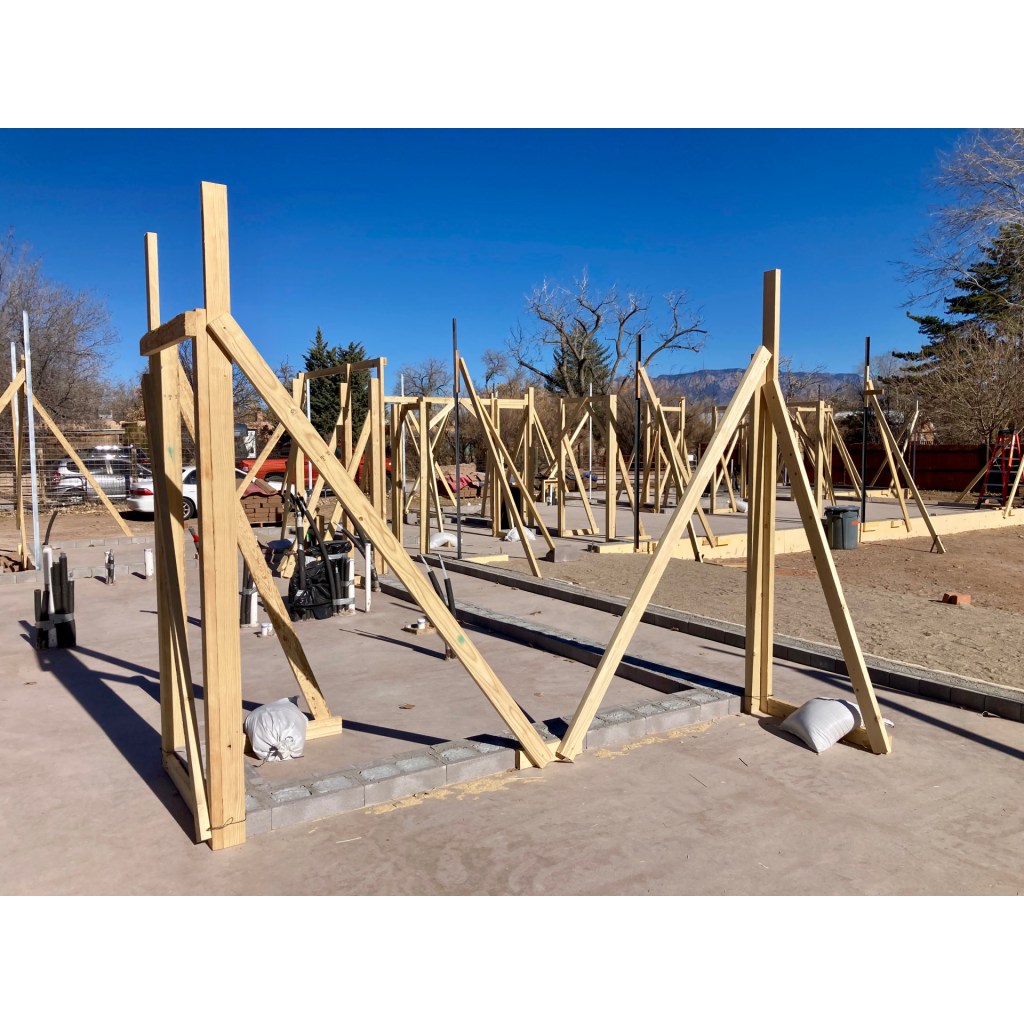
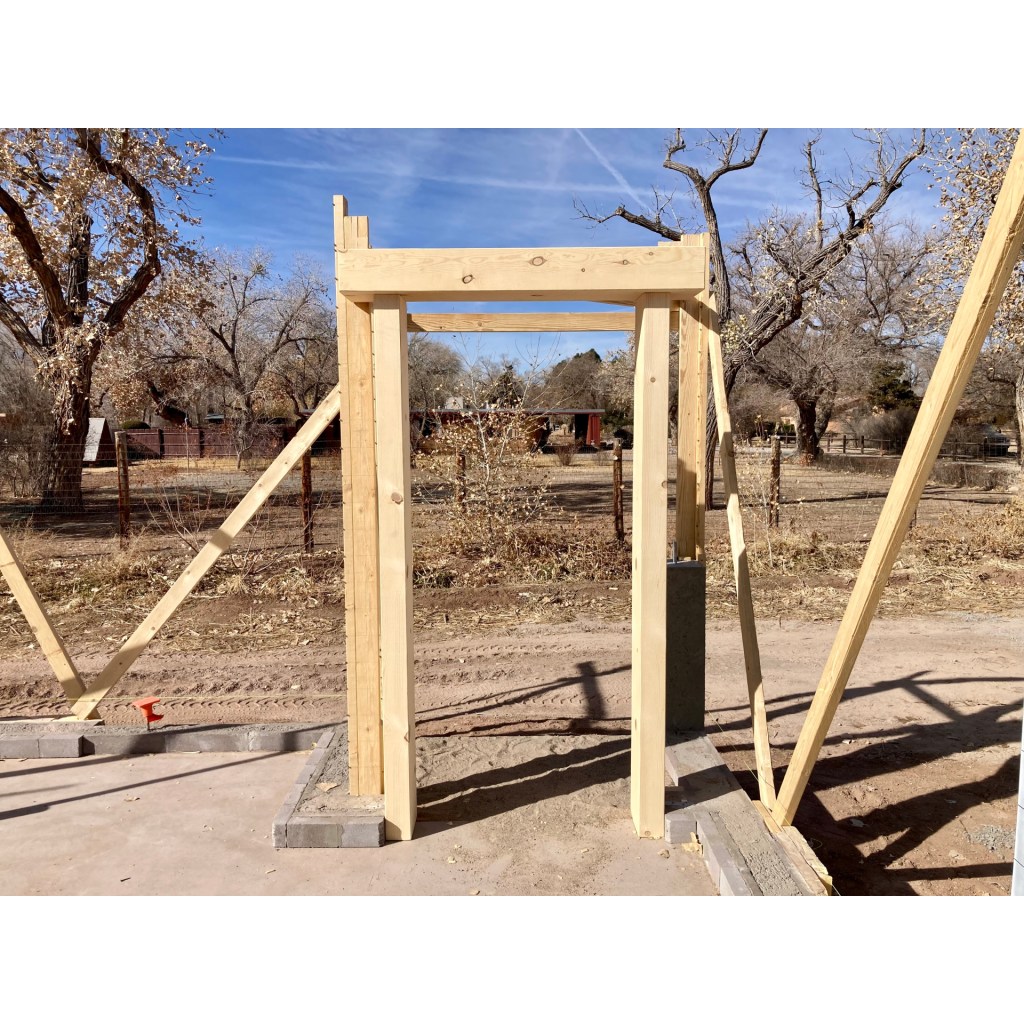
Since wrapping up the foundation work, we’ve been getting ready to lay adobe: working out our heights, erecting and plumbing story poles to guide the masonry, and building door and window bucks. Nothing particularly new here, just stuff that you gotta do if you’re ever going to get into the mud! 🙂
#adobehouse #buildingpad #footers #radonmitigation #adobeconstruction #finehomebuilding #adobebuilder
Jan 9, 2025
 abqjoinery.com