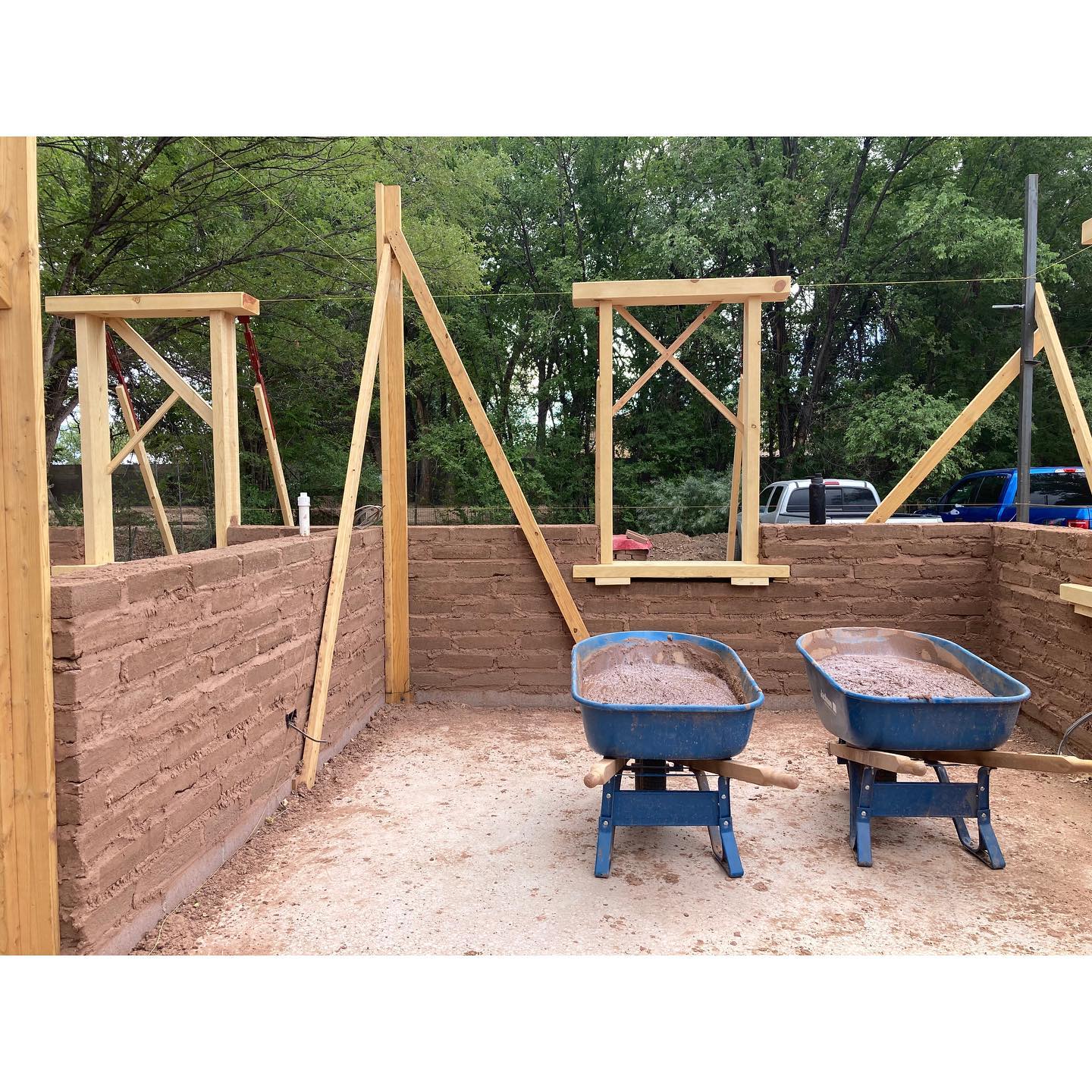
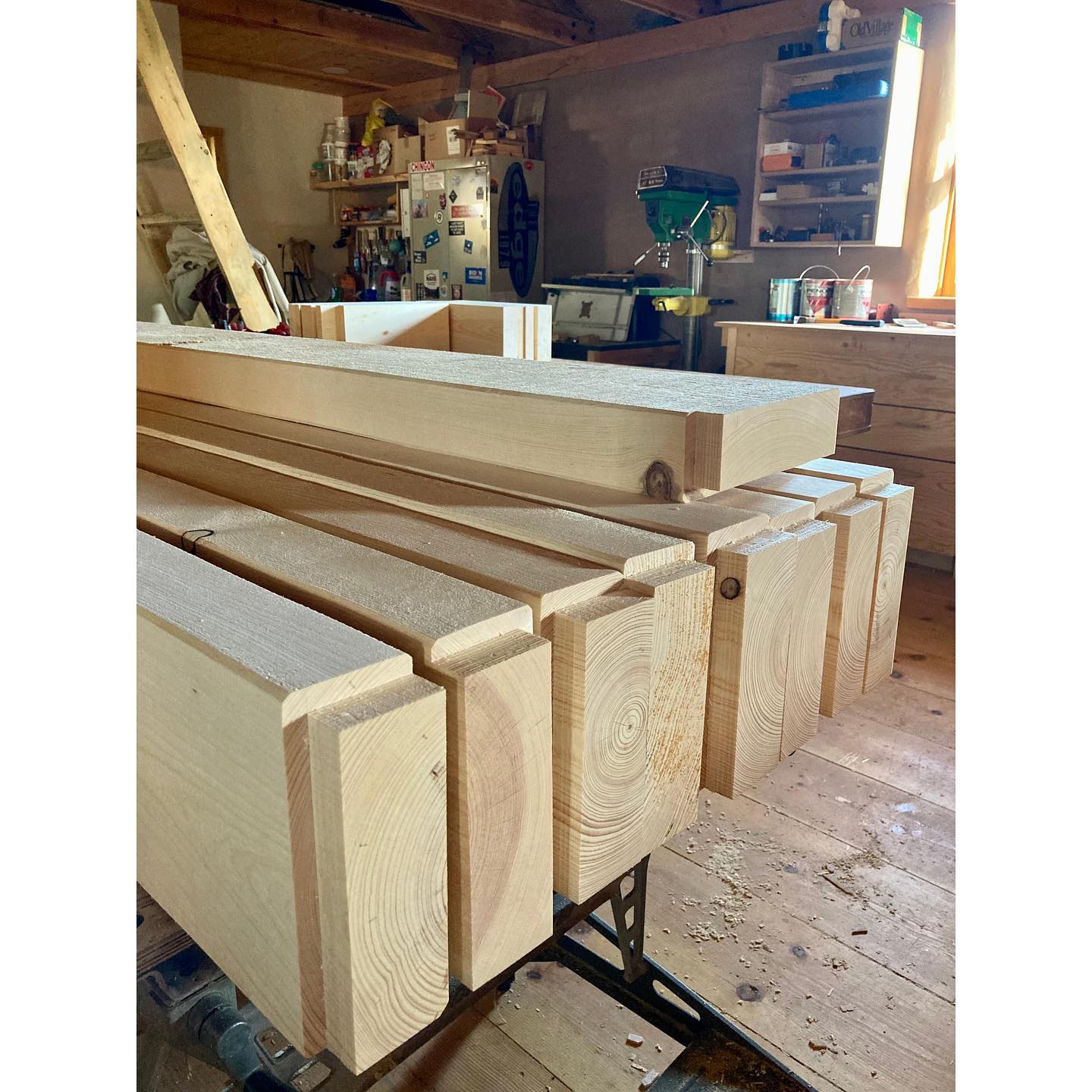
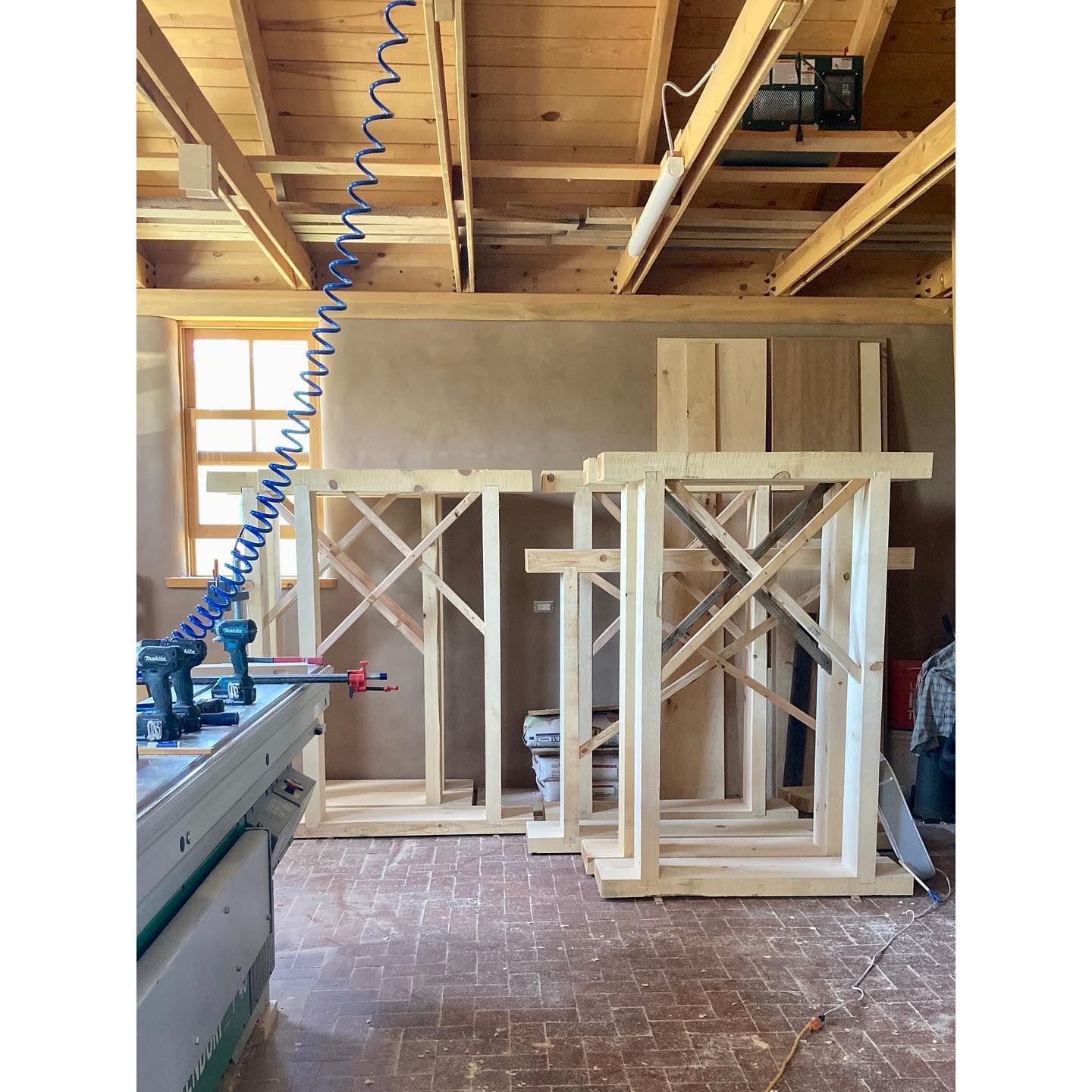
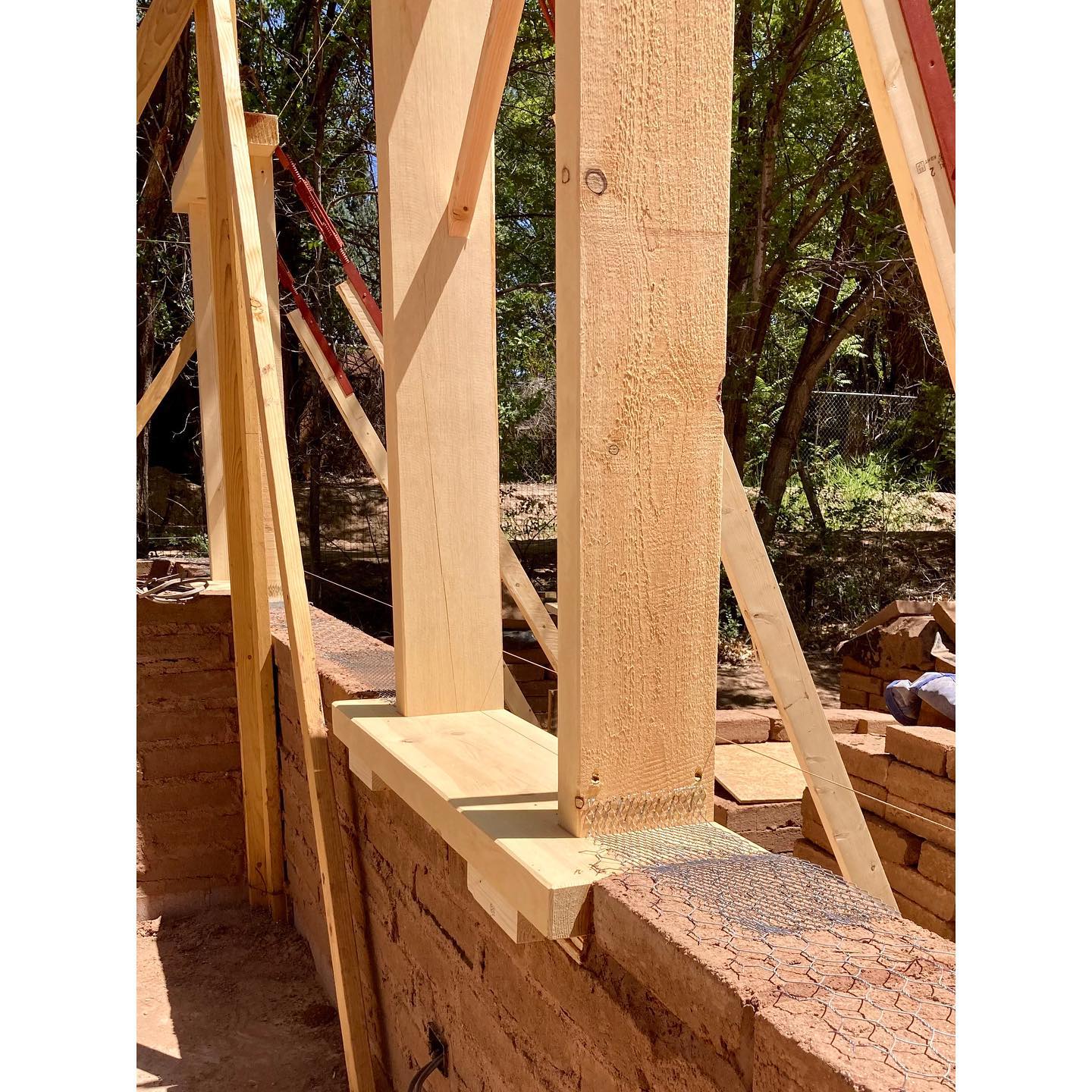
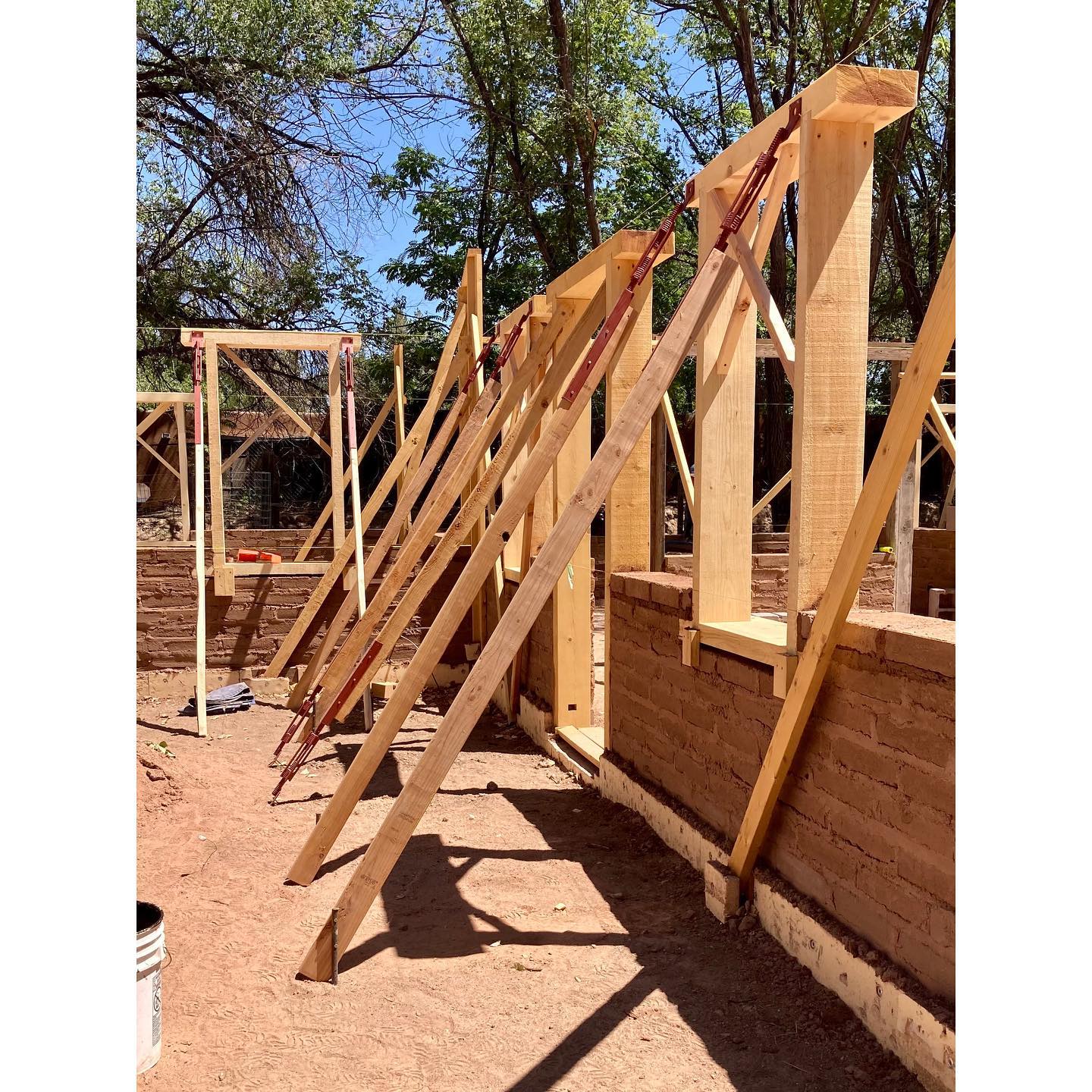
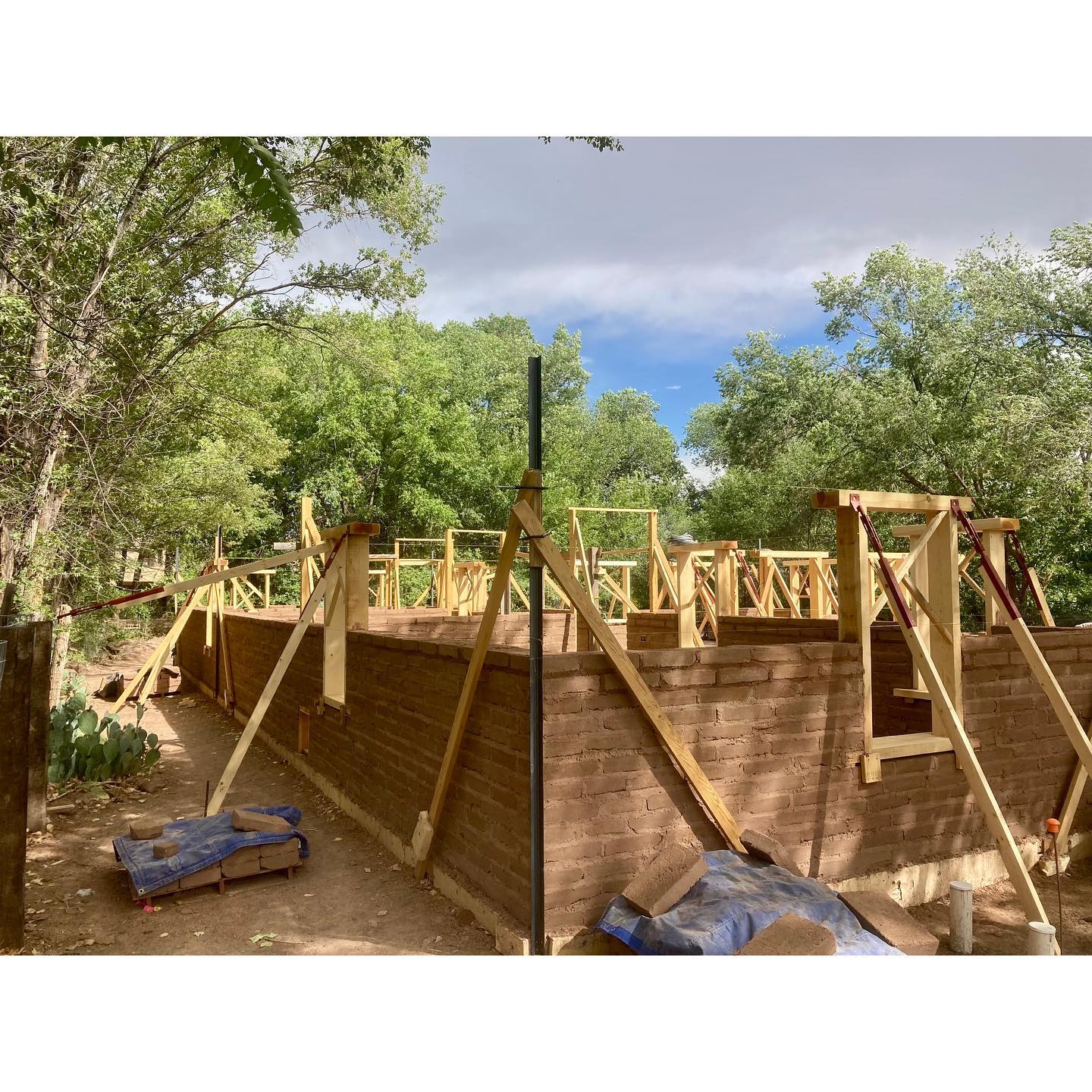
Window bucks like these are a construction detail you might come across in some adobe homes. From what we can tell, this way of doing window bucks doesn’t have a super long history, and appears to have developed in the 1960’s or 70’s. More than just creating a space in which to put the window, the bucks are a finished detail and do not get plastered over inside. It’s an odd detail, in a way, because it is a finished piece of woodwork that goes into the building before the roof is even on. In adobe construction, though, there is nothing unusual about expressing structural elements in the finished structure. This may be one of the main things that differentiates adobe construction from frame, where most all the structural elements are hidden. During the construction process, we try to keep them clean, but there’s no way to keep all of the adobe mud, sun and (very occasional) rain off them. They’ll get cleaned up in the finishing stages, but the weathering is irreversible — and probably essential. On a practical note, using bucks makes the adobe laying easier — they’re always there to tell you exactly where to stop for window and door openings, and if you keep an eye on ’em, you end up with square and plumb openings at the end. Bucks of one kind of another are common in all kinds of masonry, but owing to the “soft” nature of adobe, i.e., its relatively low compressive strength, its monolithic nature, and its tendency to settle over the first few months after stacking, we like to do things a tad differently. Rather than setting the frame directly on the adobe, you can see here that we’ve shimmed it up to its desired height. After the wall has a good hold of it, we’ll remove the shims so that the frame can move with the wall as it settles into its forever position. Instead of gringo blocks, the frames are tied into the adobe with strips of metal lath. Strong, yet more flexible, the lath strips are much longer than gringo blocks, so this assembly ends up being better tied into the fabric of the wall.
Aug 15, 2023